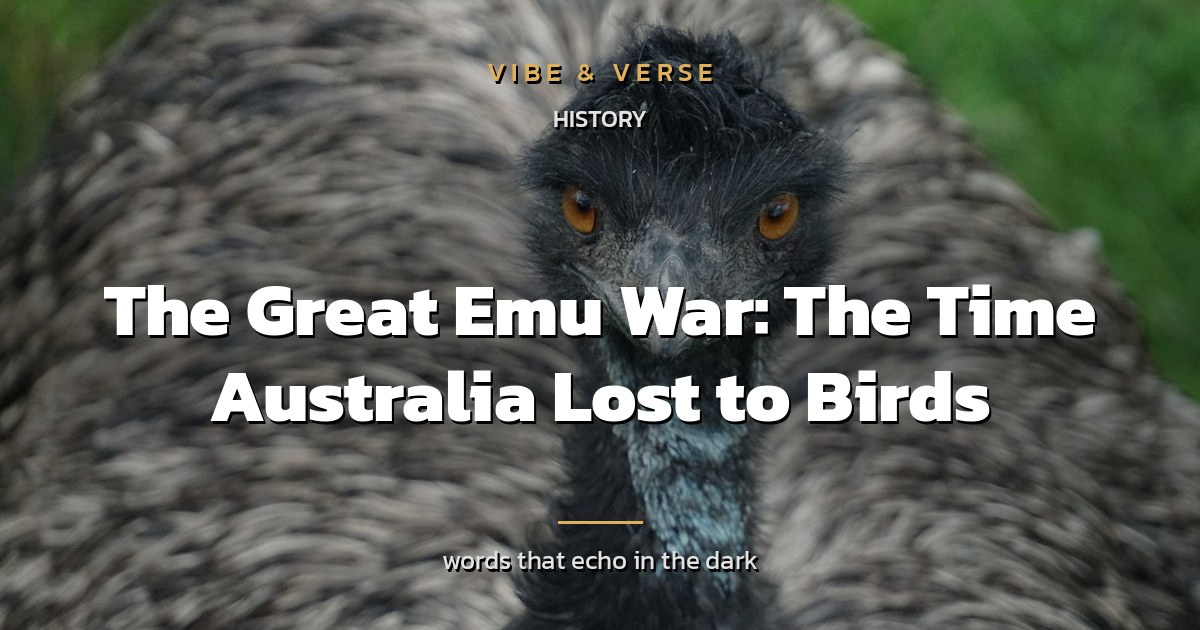
History is full of grand military campaigns, but few end with a nation quietly conceding defeat to a flock of birds. Yet that is more or less what happened in Australia in 1932, in an episode so improbable it sounds invented. It's remembered, only half-jokingly, as the Great Emu War — and it remains a genuine chapter in Australian history.
A Perfect Storm on the Farm
To understand how it happened, you have to picture Western Australia after the First World War. Veterans had been given tracts of land to farm wheat, but times were desperately hard. The Great Depression had crushed crop prices, and the farmers were struggling to survive. Then came the emus.
Emus are large, flightless birds, standing up to nearly two meters tall and capable of running at high speed. Each year, as the weather turned dry inland, tens of thousands of them migrated toward the coast — and discovered that the newly cleared farmland offered exactly what they needed: water and food. They descended on the wheat fields in enormous numbers, trampling crops, devouring grain, and smashing through the fences that were meant to keep rabbits out.
Sending in the Army
The desperate farmers, many of them former soldiers, asked the government for help — specifically, for machine guns. The authorities agreed, and a small military detachment was dispatched with two light machine guns and thousands of rounds of ammunition. The plan seemed straightforward: the birds were a pest, the soldiers had firepower, and the matter would be settled quickly.
The emus had other ideas.

The Birds Fight Back
From the very first encounter, things went badly. The emus turned out to be far harder targets than anyone anticipated. When approached, the flocks scattered into small groups, sprinting in every direction, making it nearly impossible to hit many at once. They proved astonishingly tough, absorbing hits and running on. One machine gun jammed at a critical moment as a large flock fled.
Observers noted, with a mixture of frustration and grudging respect, that the emus seemed to have organized themselves. The birds even appeared to post lookouts — large individuals that would watch for danger and signal the flock to run while the others fed. Against this fast, scattered, resilient enemy, the ammunition was being spent at an alarming rate for very little result.
An Undignified Retreat
After days of effort, the numbers were embarrassing. An enormous quantity of ammunition had been expended, and only a small fraction of the emus had been killed. The campaign was reported in newspapers with growing amusement, and the matter was even raised in Parliament, where it became something of a national joke. The military detachment was eventually withdrawn. The emus, for their part, went right on eating the wheat.
The farmers went back to older methods — fencing and bounties — which proved slower but far more effective than field artillery against a flock of sprinting birds.
The Takeaway
The Great Emu War is remembered today mostly for its comedy, and it is genuinely funny — a nation's army outmaneuvered by flightless birds. But underneath the laughter is a real lesson that keeps proving true: nature is rarely as easy to control as we assume. Firepower is no substitute for understanding your problem, and sometimes the humblest-looking opponent turns out to be more than a match for our confidence.




Be the first to share a thought.