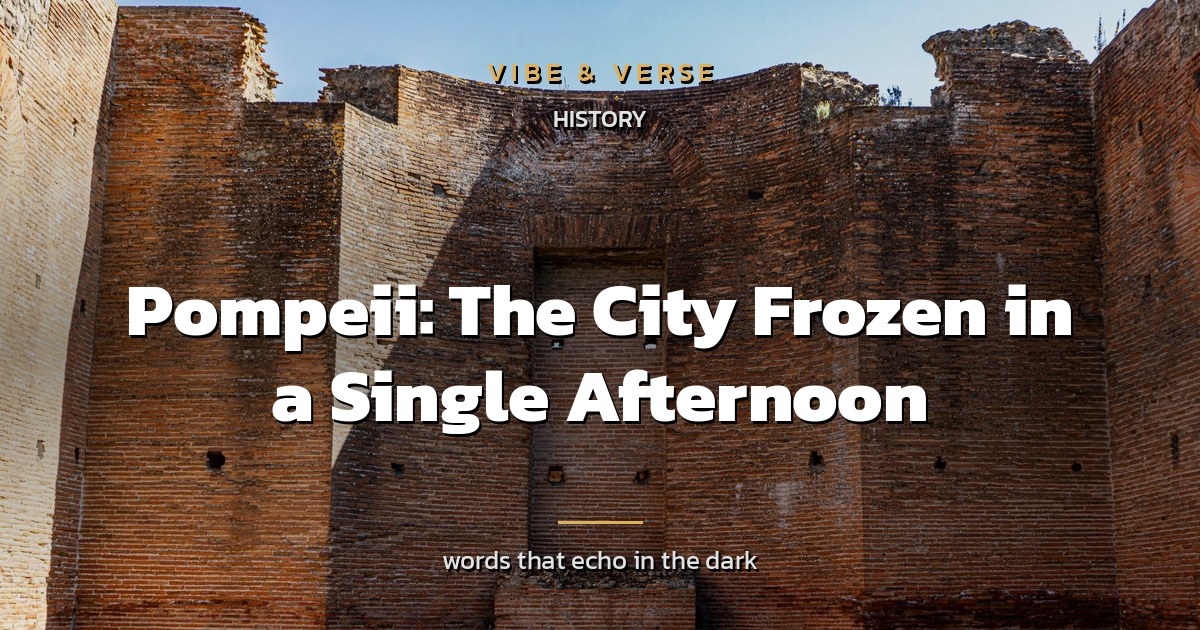
Most of the ancient world reaches us in fragments: broken columns, worn coins, a few lines of text. Pompeii is different. When the Roman city died in the year 79, it wasn't erased — it was sealed, frozen in a single terrible afternoon, and handed down to us almost intact. To walk its streets today is to step directly into a Roman life interrupted mid-sentence.
The day the mountain woke
Pompeii sat in the shadow of Mount Vesuvius, a volcano the townspeople didn't even recognize as dangerous. When it erupted, it buried the city under metres of volcanic ash and rock over roughly two days. Many residents fled; thousands did not escape in time. The same ash that killed them also became their preservation.
A city sealed in time
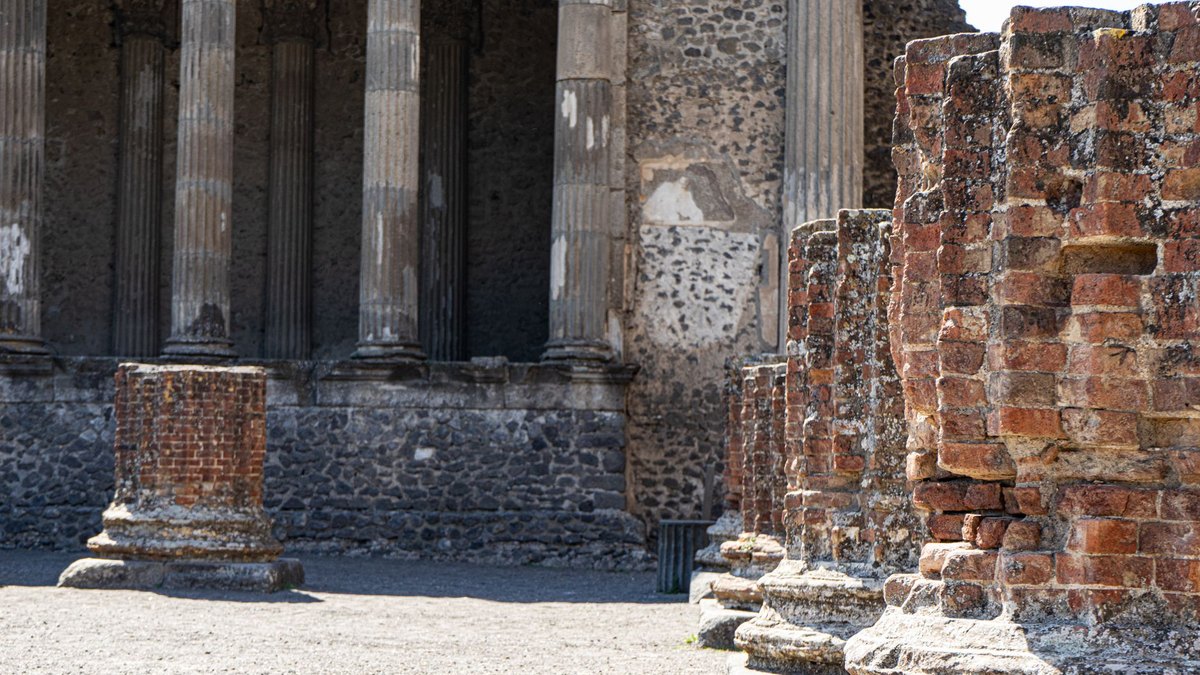
Because the ash sealed everything from air and moisture, Pompeii survived in astonishing detail. Excavators found frescoes still bright on the walls, mosaics underfoot, shops with their counters intact, political slogans painted in the streets, and even loaves of bread still sitting in bakery ovens. It is less a ruin than a snapshot — an entire ordinary town caught in the middle of a normal day.
The people themselves
The most haunting discovery came later. The bodies of those who died had decayed, leaving hollow spaces in the hardened ash. By pouring plaster into these cavities, archaeologists created casts of the victims in their final moments — huddled families, a person shielding their face, a dog straining at its chain. These figures turned Pompeii from a history lesson into something deeply, uncomfortably human.
Why it still matters
Pompeii taught us more about daily Roman life than almost any other source — how ordinary people cooked, worked, worshipped, and even joked, details that grand monuments never record. Much of the site is still being excavated, and new discoveries continue to emerge from the ash.
There's a strange mercy in the tragedy. A disaster that ended thousands of lives also gave the future its clearest window into the ancient past. Pompeii endures because, in a single afternoon, time simply stopped — and left the door open for us to look inside.

Be the first to share a thought.