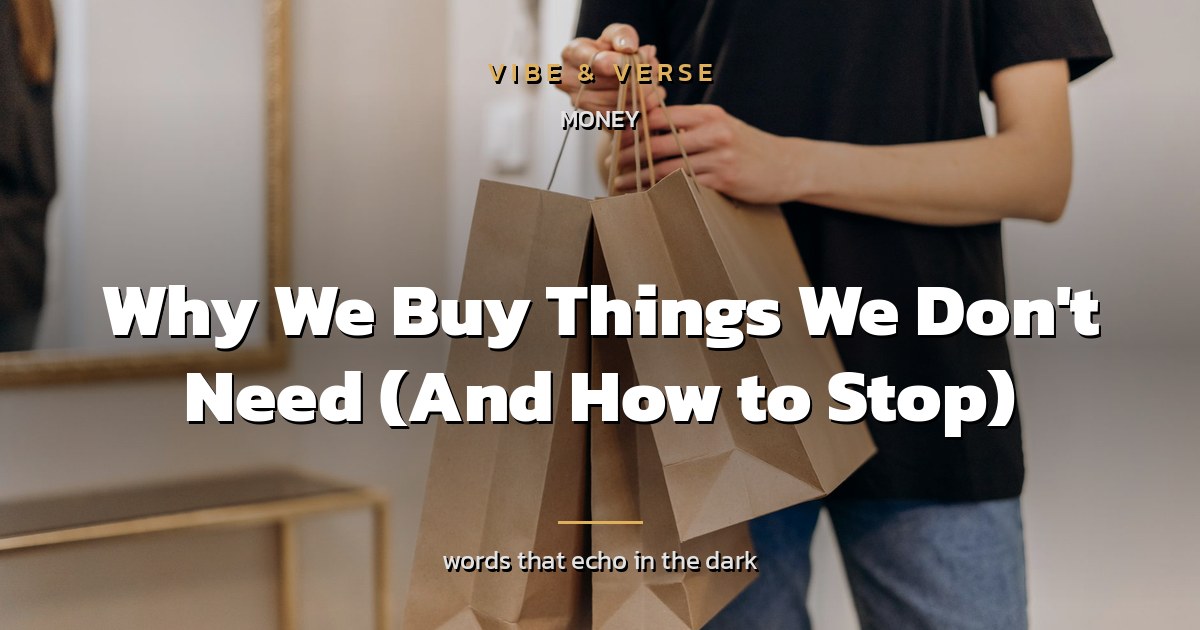
You've done it. Something you didn't plan to buy, didn't really need, and barely thought about — and yet there it was, in your cart, then at your door. Days later the thrill was gone. Understanding why this happens is the first step to spending on purpose instead of on impulse.
The chemistry of the click
The pleasure of shopping comes largely from anticipation. When you spot something you want, your brain releases dopamine — a chemical tied not to the reward itself but to the expectation of it. That means the high peaks before the purchase arrives. This is why the item feels thrilling in the store and dull a week later: you were chasing the anticipation, not the object.
Retail is engineered
Nothing about modern shopping is accidental. One-click checkout removes the pause that might let you reconsider. 'Only 2 left' creates artificial urgency. Free-shipping thresholds nudge you to add an extra item you didn't want. Sales make you feel you're gaining money by spending it. Each trick is small; together they're a machine built to convert impulse into income.

Emotional spending
We also buy to manage feelings. Bored, stressed, sad, or celebrating — shopping offers a quick hit of control and comfort. 'Retail therapy' is real in the moment, but it treats the symptom, not the cause, and often adds a second problem: regret and clutter.
Simple ways to break the loop
Add friction back in. Use a 24-hour rule for anything non-essential: put it in the cart and wait a day — most of the urge simply evaporates. Delete stored card details so buying takes effort. Unsubscribe from sale emails that manufacture wants you didn't have. And when the urge hits, name the feeling first: are you actually shopping for a jacket, or for a way to feel better?
Spending isn't the enemy — mindless spending is. Buy the things that genuinely add to your life, and starve the impulses that don't. The money you keep is quieter than the thrill of buying, but it lasts a great deal longer.
Be the first to share a thought.